Telehandler Forklift Specs
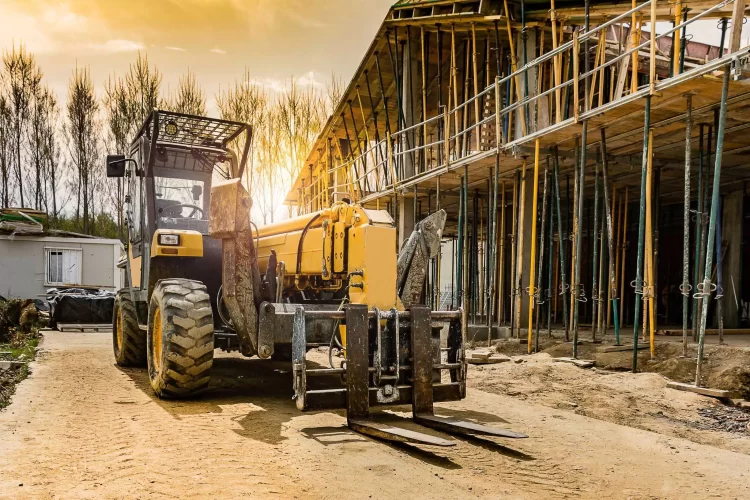
Telehandler forklifts are ideal for tough, outdoor conditions. Fitted with outriggers for increased stability and pneumatic tires for easy navigation over rough terrain, these machines get the job done.
The forks of a telehandler lift extend away from the machine and can tilt if needed. Lift height and load capacity vary depending on the specific model and brand of equipment, but here are the general specifications:
Lift Height
A telehandler forklift has an extendable boom arm. The maximum lift height of the equipment depends on this arm. Since the boom arm usually extends at a 70-degree angle, the equipment loses some of the height it would have had if it raised straight up at a 90-degree angle.
Typically, a telehandler forklift has a lift height between 30 and 56 feet. This number varies depending on the specific model you choose. Make sure you have an idea of the lift height you’re looking for before browsing telehandler forklifts for sale.
Load Capacity
The load capacity of a telehandler depends on the specific equipment and the load center. OSHA defines the load center as the distance from the face of the forks to the load’s center of gravity. As the load center increases, the load capacity decreases.
This means that load capacity decreases as the telehandler boom angle decreases. You can find information regarding the capacity of your equipment on its load capacity chart. The telehandler load chart shows the maximum weight of the load as the load center changes.
Depending on the model and manufacturer, telehandler forklifts can have a load capacity between 6,000 and 14,000 pounds.